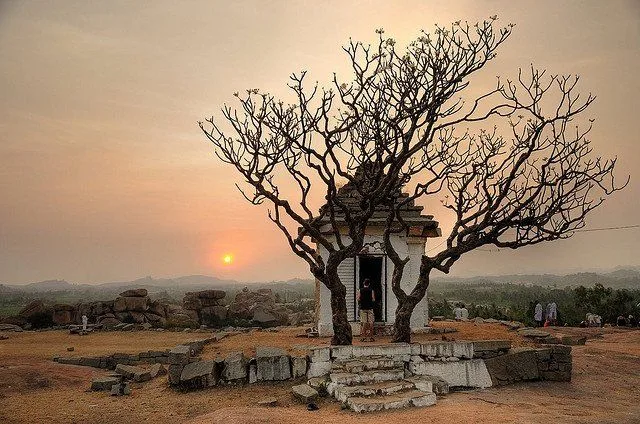
However, in 1565, following a catastrophic military defeat at the Battle of Talikota, the glorious capital was systematically pillaged, burned, and abandoned to the elements. Today, the extensive ruins are recognized globally as a premium UNESCO World Heritage Site. Spread across an extraordinary 4,100 hectares of rugged terrain, Hampi presents a stark landscape where thousands of ancient stone structures—ranging from royal palaces and fortified walls to grand temple complexes and bustling market avenues—are scattered among millions of giant, naturally balanced granite boulders. [
1]
For your travel platform,
bbglobalevents.com, Hampi serves as an exceptional product anchor. Its unique combination of deep spiritual history, ancient military architecture, and dramatic landscapes makes it an elite choice for designing high-yield heritage tours, artistic photography walks, and adventurous backpacking getaways. [
1]
The Sacred Center: Monumental Devotion and Musical Pillars
The geographic and spiritual landscape of Hampi is fundamentally divided into two major zones: the Sacred Center along the riverbank and the Royal Center further inland. The Sacred Center is anchored by the magnificent Virupaksha Temple, a sprawling religious complex that stands uniquely as the only major structure to have survived the medieval destruction. Serving as an active place of worship since the 7th century, the temple features a towering, nine-tiered entrance gateway (gopuram) that rises 160 feet into the air. Stepping past the busy outer courtyards reveals detailed ceiling frescoes dating back centuries, alongside a historic pillared hall built by the empire's greatest ruler, Emperor Krishnadevaraya. The temple provides a deep cultural insight for travelers, who gather daily to witness traditional morning rituals and interact with Lakshmi, the revered temple elephant.
Moving down the historic riverside paths leads to Hampi’s absolute artistic masterpiece: the
Vijaya Vittala Temple. Dedicated to an avatar of Lord Vishnu, this 16th-century complex represents the absolute peak of Vijayanagara sculptural skill. Entering the main courtyard brings travelers face-to-face with the iconic
Stone Chariot, a beautifully detailed shrine carved out of massive granite blocks that is so culturally important it is printed directly onto India’s official 50-rupee currency note. [
1]
Just behind the chariot stands the famous Maha Mandapa (Grand Hall), which sits on a carved stone base depicting mythical beasts. The hall is globally renowned for its fifty-six Musical Pillars. Carved out of single blocks of solid resonant granite, these structural columns function as delicate musical instruments, emitting distinct notes when tapped gently by hand. While the government has fenced off the inner hall to preserve the delicate stone, the exterior view alone leaves architecture students and global history lovers in absolute awe of ancient Indian engineering.
The Royal Center: Indo-Islamic Elegance and Military Might
In sharp contrast to the towering religious structures of the riverbank, Hampi’s inland
Royal Center offers an immersive look into the administrative and private lives of the historic court. This zone is highly praised by historians for its exceptional Indo-Islamic architectural crossover, highlighting how the Hindu kings smoothly integrated the design styles of neighboring northern sultanates into their own structures. The premier example of this blend is the
Lotus Mahal, a beautiful, double-storied pavilion that survived the fires of war perfectly intact. Shaped symmetrically like an opening lotus bud, the structure features beautifully sculpted multi-foiled arches on the ground floor, leading up to a stepped roofline modeled after traditional Hindu temple towers. The building was historically engineered with an advanced internal water-cooling system, where fresh water was piped through hollow walls to keep royal ladies comfortable during the intense summer heat. [
1]
Directly adjacent to this pavilion stands the grand perimeter of the Elephant Stables, a monumental masonry structure that showcases the incredible military wealth of the empire. This symmetrical building features a row of eleven large, high-ceilinged chambers, each topped with a distinct Islamic-style dome. These chambers were built exclusively to house the king's elite royal military elephants, with a central staircase leading to a viewing gallery where the emperor could watch military parades.
Just a short walk away sits the Queen's Bath, a large, understated building surrounded by a protective moat. Stepping through its simple entrance reveals an expansive, sunken rectangular swimming pool surrounded by beautiful corbeled arches and projecting balconies. This design allowed royal bathers to look down into the fresh waters below completely unseen, preserving courtly privacy while highlighting a sophisticated ancient lifestyle.
Living Traditions: Boulder Viewpoints and Riverside Culture
An authentic journey through Hampi extends past stone monuments into its unique geographic landscape and laid-back riverside culture. The entire region is a geological wonder, blanketed in massive, pink-tinted granite boulders formed by billions of years of volcanic activity and natural weathering. For active travelers, hiking up the ancient stone steps of Matanga Hill before dawn is an essential experience. As the sun rises over the horizon, it bathes the entire valley in a brilliant golden light, revealing a panoramic view of the winding Tungabhadra River, green banana plantations, and distant temple towers emerging from the boulder fields.
This rugged geography has also made Hampi a premier global destination for
bouldering and rock climbing, drawing international athletes who spend weeks scaling the challenging rock faces. To cross the river to the northern bank—traditionally known as Anegundi or "Hippie Island"—travelers step into a
Coracle, a traditional, circular bowl-shaped boat woven out of bamboo and waterproofed with resin. Drifting across the swirling currents of the river in these historic round boats provides an exciting element of adventure to the itinerary. [
1]
Once across the river, the atmosphere shifts into a relaxed, bohemian space filled with rustic cafes, wellness centers, and scenic pathways leading to Sanapur Lake. Here, guests can relax along the boulder-lined shores, participate in group drumming circles at sunset, or explore traditional craft shops focusing on handmade banana-fiber textiles, offering a balanced contrast to the intense historical exploration of the main ruins.
Operational Blueprints for Travel Planners
For your travel management company, bbglobalevents.com, designing a tour itinerary for Hampi requires a specialized approach to local climate and transit logistics to ensure maximum customer satisfaction. Because Hampi is fundamentally a massive, open-air archaeological park with minimal shade, recommending a dedicated 2 to 3-day itinerary is absolutely crucial.
Trying to rush the destination in a single day leads to extreme physical exhaustion from walking across the hot granite terrain. It is highly recommended to schedule monument walks during the cooler morning hours, while reserving late afternoons for relaxed coracle boat rides on the river or watching the sunset from the low slopes of Hemakuta Hill.
Logistically, the destination requires careful transport planning. While the small Jindal Vijayanagar Airport (VDY) operates limited domestic flights, the primary transit hub is the Hosapete Railway Station (HPT), located just 13 kilometers from the ruins. Hosapete connects smoothly to major economic hubs via comfortable overnight express trains, allowing travelers from Bengaluru or Goa to fall asleep on the train and wake up right at the doorstep of the ruins.
Within the protected monument zone, the government enforces a strict ban on large fossil-fuel vehicles to prevent air pollution from damaging the ancient carvings. Tourists step off their transport buses at designated parking areas and travel the final leg via quiet electric auto-rickshaws or battery-operated golf carts. For younger tour groups, arranging rental bicycles or gearless scooters is an excellent way to add a fun sense of freedom to the journey, helping you deliver a comfortable, eco-friendly, and professional holiday package.